


1996 Pokemon 'No Rarity Symbol' Cards Guide: What To Buy?

Updated: Aug 21

Brace yourself, collectors—we’re peeling back the peel on Pokémon’s original print run: the famed “No Rarity Symbol” 1996 Japanese Base Set.
Introduction — 1996 Pokémon No Rarity Symbol Cards
The “No Rarity” cards are the original 1996 Japanese Base Set prints by Media Factory (released 20 October 1996 via Star Corporation). These first‑wave cards lack the later circle/diamond/star markers in the bottom‑right corner and often show early printing quirks and errors (notably Venusaur, Charizard, Raichu, Gastly). For collectors, No Rarity pieces represent Japan’s true first edition and a critical target for vintage Pokémon hunting.
Origins & Distribution — Starter Decks and Short‑Pack Boosters
The initial run comprised two products: the Starter Deck (first‑version 104‑01 postcode + 1st edition rulebook) and the short‑pack Booster—both advertised in CoroCoro and at the World Hobby Fair in 1996. Rarity symbols first appear in documented product lines on March 5, 1997 (Jungle), so anything from the 20 October 1996 window is effectively the original Japanese Base Set release.
Disclosure: We may earn a commission from qualifying purchases made through our links.
How to Identify No Rarity Cards
Look for a blank lower‑right corner (no circle/diamond/star) and the absence of a set logo on the right side of the artwork. Early prints also contain subtle textual and formatting differences that later runs corrected—these printing quirks help confirm genuine No Rarity examples versus promos or later prints.

Market Dynamics — First Edition vs No Rarity
“First Edition” 1996 Japanese cards (the cards with symbols, introduced after No Rarity) are currently highly inflated because sealed packs and boxes still surface, yielding high‑grade supply that attract industry speculators and high‑net‑worth flippers. Genuine No Rarity Starter Decks and short‑pack boosters, by contrast, are scarcer/impossible to find. Both editions also had similar packaging so no-one can really tell which pack hold the No Rarity cards - except that not a single one has been found for ever. As sealed First Edition supply tightens, we expect renewed collector focus—and a market rotation—toward true No Rarity material driven by provenance and rarity.
Modern vs Vintage Demand
Modern Pokémon releases generate headline‑grabbing spikes from chase pulls and limited runs, but No Rarity cards trade on historical cachet: archival scarcity, printing errors, and first‑wave provenance. Think long‑term vintage appreciation and detective‑style authentication rather than short‑term viral flipping. Collectors are overlooking the historical value of No Rarity cards; their steady growth has been resilient to modern market dips, making them one of the best long‑term investments among items still reasonably attainable.
Items That Lack Rarity Symbols but Are NOT No Rarity Base Set
Be careful—many products also omit rarity symbols but aren’t part of the 1996 No Rarity Base Set:
- Gym cards from certain decks
- Neo Premium Files cards lacking symbols
- Early glossy promos and Quick Starter Gift Set artworks (vending series)
Also note: some sellers misuse “No Rarity” in listings despite visible rarity symbols—always verify the card’s markings and provenance.
How We Chose the Top Pokemon No Rarity Cards To Buy
This guide ranks the most expensive 1996 Pokémon No Rarity Symbol cards using market data (primarily eBay), focusing on sales volume, price trends, rarity, and historical significance.
Pricing Methodology
Prices reported are averages for raw (good condition) and graded examples based on the latest sales at time of writing. Values spike sharply for pristine Gem Mint (PSA 10) or black‑label cards, which are exceedingly rare; heavily damaged copies can trade for roughly 30% of the figures reported here. Linked listings include lower‑condition opportunities as all of those are hard to find nowadays.
1996 Pokemon Base Set Japanese NO RARITY SYMBOL #6 CHARIZARD-HOLO
Average Raw Price: $8,700
Average Graded Price (PSA8): $21,900

Mitsuhiro Arita—one of Pokémon’s most prolific illustrators—originally sketched this Charizard art in pencil; Nintendo later digitized and colored the piece for the card. The dynamic depiction of Charizard firing a Fire Spin straight at the viewer has become the hobby’s most iconic and instantly recognizable image. Aside from the missing rarity symbol shared by every card on today’s list, note that the height and weight were corrected in later prints (to 1.7 m and 90.5 kg), and a text typo on the same line was fixed. While we display good‑condition market prices, we strongly recommend considering lower grades and conditions as well—these are the rookie Charizards of the Japanese Base Set, and more affordable, imperfect copies are an important part of the market.
1996 Pokemon Base Set Japanese NO RARITY SYMBOL #150 MEWTWO-HOLO
Average Raw Price: $650
Average Graded Price (PSA8): $3,500

Ken Sugimori hand‑drew the original Mewtwo illustration for the first 151 Pokémon (Red/Blue), rendered in his early stiff, watercolor‑like style with a “monstrous yet familiar” silhouette inspired by Japanese tokusatsu (notably 1954 Godzilla).
The design’s “savage heart” suits Mewtwo’s lab‑created origin, and its cultural impact was cemented by Pokémon: The First Movie — Mewtwo Strikes Back (Japan 1998; North America late 1999); Mewtwo remains one of the world’s top‑10 most popular Pokémon. Note that among the 16 holographic cards in the Base Set, Mewtwo and larger‑background cards like Blastoise are especially likely to showcase the swirl effect, which displays better on more expansive backgrounds. The swirl comes from a specific foil called Cosmos (or Galaxy), which is the only pattern that produces swirls. These foil sheets included many star patterns but only a few rare swirling (spiral) stars; because sheets were cut randomly, swirl patterns appeared only when a card was cut from that tiny section—making swirl stars a scarce, collectible bonus rather than a standard feature.
1996 Pokemon Base Set Japanese NO RARITY SYMBOL #9 BLASTOISE-HOLO
Average Raw Price: $750
Average Graded Price (PSA9): $9,900

Ken Sugimori, Pokémon’s original art director, created the Blastoise illustration—one of his earliest designs from 1990—for promotional artwork and in‑game assets for Pokémon Red and Green. Rendered in his signature early style of soft watercolors, clean lines, and expressive yet simple posing, this piece remains a defining example of classic Pokémon card art.
1996 Pokemon Base Set Japanese NO RARITY SYMBOL #25 RAICHU-HOLO
Average Raw Price: $750
Average Graded Price (PSA9): $4,900
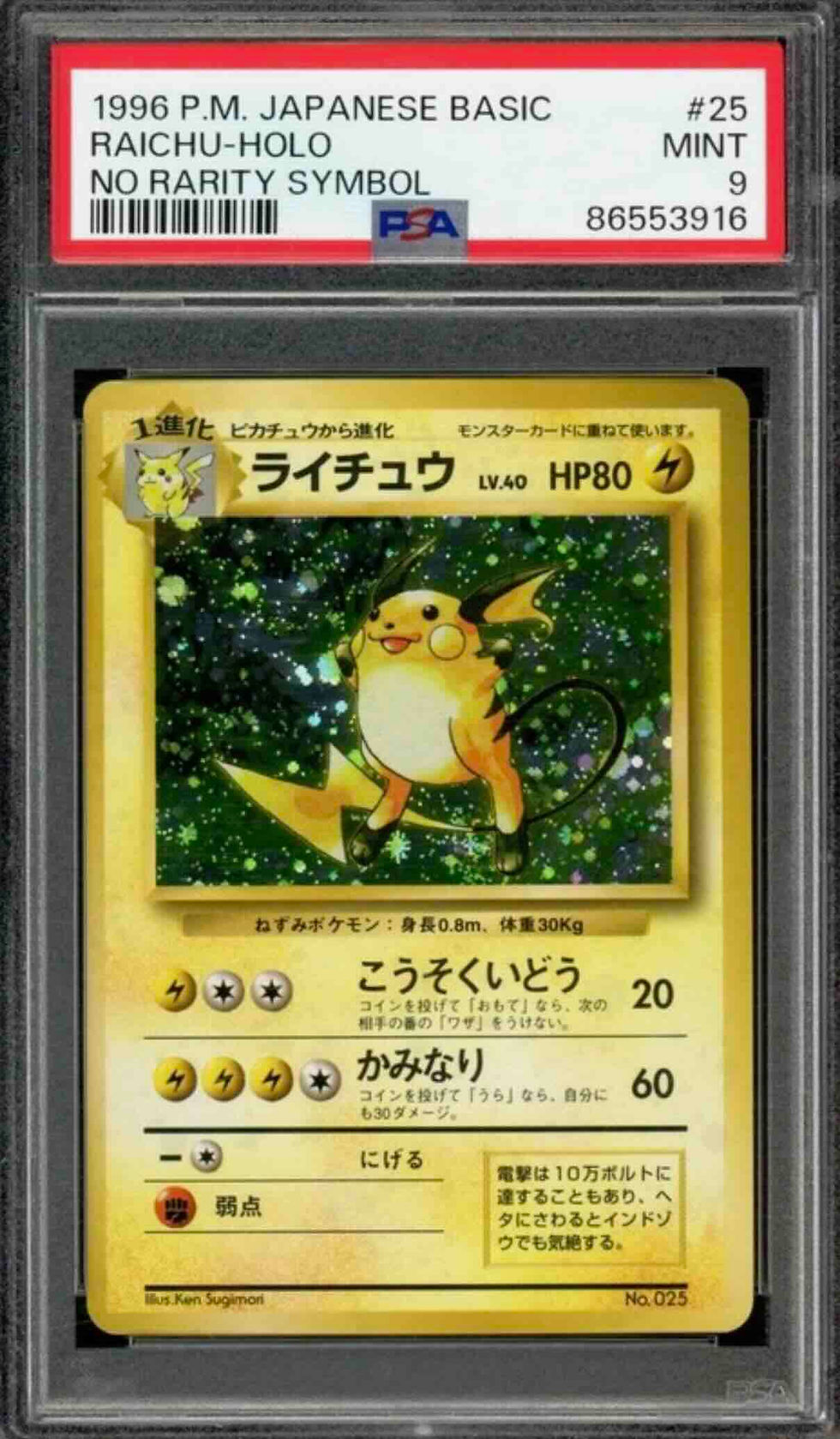
Raichu is a key target for Master Set collectors pursuing every holographic variant of the original 151. With only 1 PSA10 in circulation, and twice less total population, getting the No Rarity Raichu in PSA9 became a true "boss‑level" acquisition for elite collections and completionists.
1996 Pokemon Base Set Japanese NO RARITY SYMBOL #3 VENUSAUR-HOLO
Average Raw Price: $300
Average Graded Price (PSA9): $5,000

Another work by Mitsuhiro Arita, this Venusaur completes the 'Big Three' alongside Charizard and Blastoise, is essential for serious collectors, and stands as a cornerstone of the Pokémon TCG’s origin story. Approximately 7,537 copies have been graded—one of the highest holo populations in the set—with 715 achieving a PSA 10 Gem Mint grade. However, as collectors converge on the Big Three, Venusaur copies needed to complete sets (especially high graded) have become increasingly scarce on the market.
1996 Pokemon Base Set Japanese NO RARITY SYMBOL #65 ALAKAZAM-HOLO
Average Raw Price: $200
Average Graded Price (PSA9): $4,675

Ken Sugimori, Pokémon’s original art director, created this watercolor illustration for the 1996 Red/Green promotional artwork. Notably, the card contains an artistic error: Alakazam is missing the star on its forehead (present on Kadabra) because Sugimori mistook the mark for shading when finalizing the official art—an original design oversight that makes the card historically valuable. With just nine PSA 10 Gem Mint copies, the few PSA 9 examples now on the market have seen asking prices quintuple since the last sales.
1996 Pokemon Base Set Japanese NO RARITY SYMBOL #38 NINETALES -HOLO
Average Raw Price: $140
Average Graded Price (PSA9): $1,680

Though often overshadowed by Pikachu and the three starters, Ninetales remains a beloved Kantonian favorite for its elegant design and rich lore. Ken Sugimori—Pokémon’s original art director—painted this illustration in watercolor for the 1996 Red/Green promotional assets; the piece captures Ninetales in a graceful, ethereal pose that emphasizes its mystical, fox‑like nature.
1996 Pokemon Base Set Japanese NO RARITY SYMBOL #25 PIKACHU Base Card (No Holo)
Average Raw Price: $180
Average Graded Price (PSA9): $1,900

The sleeper of this list: Pikachu remains the franchise’s most lovable mascot, and decades of Bandai promotion have cemented its iconic status. This is the only Base Set non‑holo included—common in print but now rare in good condition—so well‑preserved examples trade at prices rivaling holos. Recently a PSA 10 sold for ¥406,119 (≈ USD 59,000) at Pokecolor, a new Chinese-based auction marketplace, underscoring the premium for top‑graded base cards.
Honourable Mentions

Other 1996 Pokemon No Rarity Holo 
Other 1996 Pokemon No Rarity Holo 
Other 1996 Pokemon No Rarity Holo 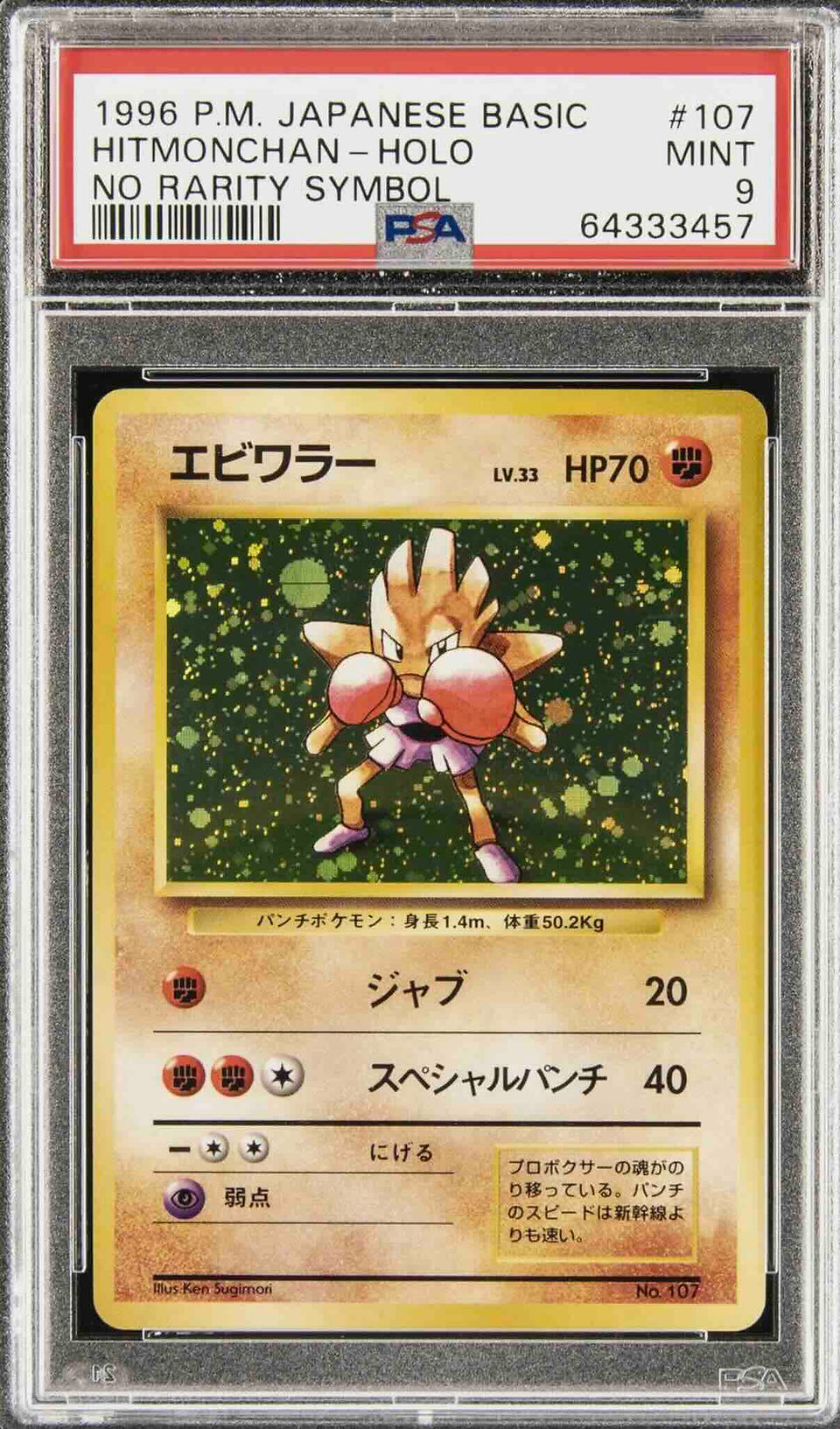
Other 1996 Pokemon No Rarity Holo
There are 16 holographics in the set; even the ones we didn’t highlight are essential for serious collectors completing the Base Set holo run. While generally more affordable than the flagships, each holo carries historical value that appeals to fans and investors seeking mint examples at comparatively reasonable prices.
Likewise, Base Set non‑holos can still command hundreds or thousands of dollars if graded high. For budget‑conscious collectors, grading a non‑holo (grading fees typically USD 30–50 for basic service, depending on provider) can be a low‑cost way to chase a high grade and meaningful upside.
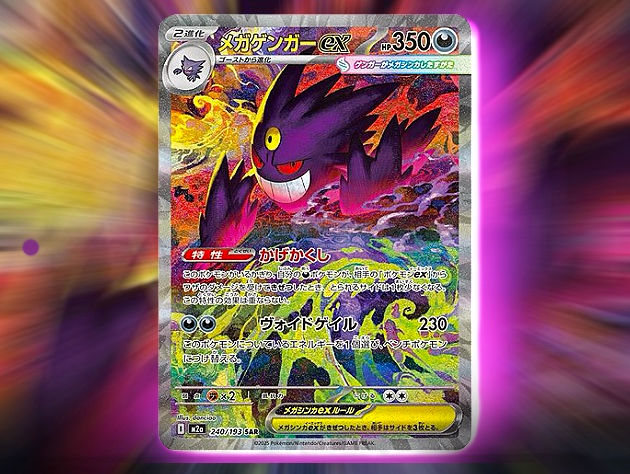
Top 10 Pokemon Mega Ex Dream To Invest In
Conclusion
No Rarity cards are Japan’s true first‑wave Pokémon relics—scarce, historically significant, and prized for printing quirks that modern releases can’t replicate. For buyers, that means careful sourcing, rigorous authentication, and realistic expectations: top grades command premiums, but mid‑ and low‑grade copies offer accessible entry points and upside for patient collectors.
Buy smart: verify provenance and photos, ensure the cards are a part of the no rarity first edition (don't believe titles only), check grading authentication number on population report when available —these cards reward diligence as much as passion.
Subscribe to the Slab-Z Weekly Newsletter
Stay ahead of the TCG & sports card market with graded card trends, rookie investment alerts, and exclusive industry insights—delivered straight to your inbox. Don’t miss updates that could turn your collection into gold.
Why wait? Knowledge is the ultimate gem mint. 🔍✨



Comments